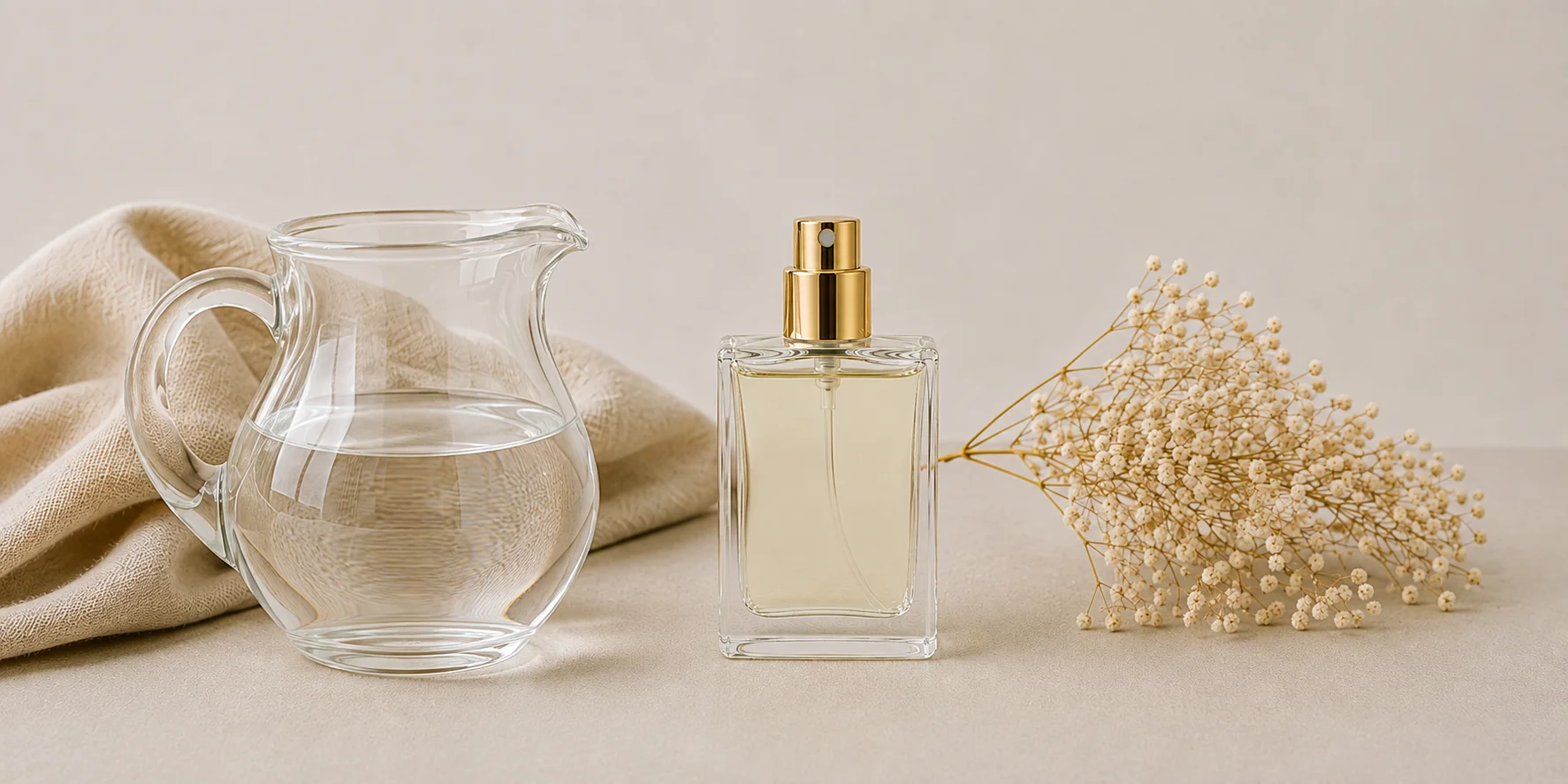
Creating your own perfume isn’t just a creative outlet—it’s an immersive, sensory experience that allows you to craft a signature scent that is uniquely yours. By using a professional-grade perfumer’s alcohol as your base, you give your custom fragrances the same exceptional quality, clarity, and longevity as luxury, store-bought brands.
Perfume Ratios: The perfect formula
|
Perfume Type |
Fragrance Oil |
Perfumers alcohol |
|
Eau de Parfum |
20-30% |
70-80% |
|
Eau de Toilette |
10-15% |
85-90% |
|
Eau de Cologne |
3-8% |
92-97% |
|
Body Mist/Spray |
1-3% |
97-99% |
Materials & Tools You’ll Need:
-
Perfumer’s Alcohol: A cosmetic-grade solvent designed to blend seamlessly with fragrance oils.
-
Perfume Inspired Fragrance Oil: Premium, skin-safe, cosmetic-grade scent oil or essential oils.
-
Perfume Bottle: Glass bottles with a high-quality fine-mist atomizer pump.
-
Additional Items: A small glass measuring cup/pitcher, a digital scale, or a glass pipette for precision.
Step-by-Step Instructions
Pro-Tip for Large Batches: If you are blending a large quantity of perfume, it is best to combine and stir your ingredients thoroughly in a glass beaker or bowl before pouring the finished mixture into your individual bottles.
1. Measure Your Base
Using a digital scale or a glass measuring cup, measure out your perfumer’s alcohol. For a classic Eau de Parfum, we recommend a ratio of 80% perfumer’s alcohol to 20% fragrance oil.
2. Fill Your Vessel
Carefully pour the measured perfumer’s alcohol directly into your chosen glass perfume bottle.
3. Add the Fragrance
Measure out your fragrance oil (making up the remaining 20% of your total batch volume) and add it directly to the perfumer’s alcohol inside the bottle.
4. Seal the Bottle
Screw the atomizer pump or cap securely back onto the perfume bottle to ensure a tight, leak-proof seal.
5. Shake and Blend
Give the bottle a good shake to completely combine the fragrance oil and the alcohol base.
FAQ
What are the benefits of using professional perfumer’s alcohol?
Unlike standard rubbing alcohol from the drugstore, premium perfumer’s alcohol is:
-
Odorless: It won’t distort or overpower your delicate fragrance notes.
-
Fast-Evaporating: It dries down quickly on the skin, allowing for perfect scent diffusion.
-
Skin-Safe: It is explicitly formulated and denatured for cosmetic use.
-
The Ultimate Solvent: It beautifully dissolves and carries both synthetic fragrance oils and natural essential oils.
How long should homemade perfume mature before I use it?
For the best results, let your finished perfume sit and cure in a cool, dark place for 2 to 6 weeks. This maturation period allows the top, middle, and base notes to blend harmoniously, softening any initial harshness from the alcohol and deepening the scent profile.
Can I use essential oils instead of fragrance oils?
Absolutely! You can use essential oils to create a completely natural perfume line. Just ensure they are certified skin-safe and properly diluted. Keep in mind that natural essential oils can be highly volatile, meaning they offer an earthy scent but may not last as long on the skin as synthetic fragrance oils.
How long does a bottle of homemade perfume last on the shelf?
When stored correctly in a cool, dark place out of direct sunlight, a well-made perfume can last anywhere from 12 to 24 months. Always avoid extreme temperatures, which can break down the fragrance molecules.
Can I sell homemade perfume in the United States?
Yes, but you must ensure compliance with US cosmetic regulations. In the US, cosmetics are regulated by the FDA under MoCRA (Modernization of Cosmetics Regulation Act). If you plan to sell, you must ensure your ingredients are completely safe for skin application, strictly follow IFRA maximum usage guidelines for Category 4 (Products applied to the neck and body), label all ingredients properly, and maintain clean manufacturing practices.

