
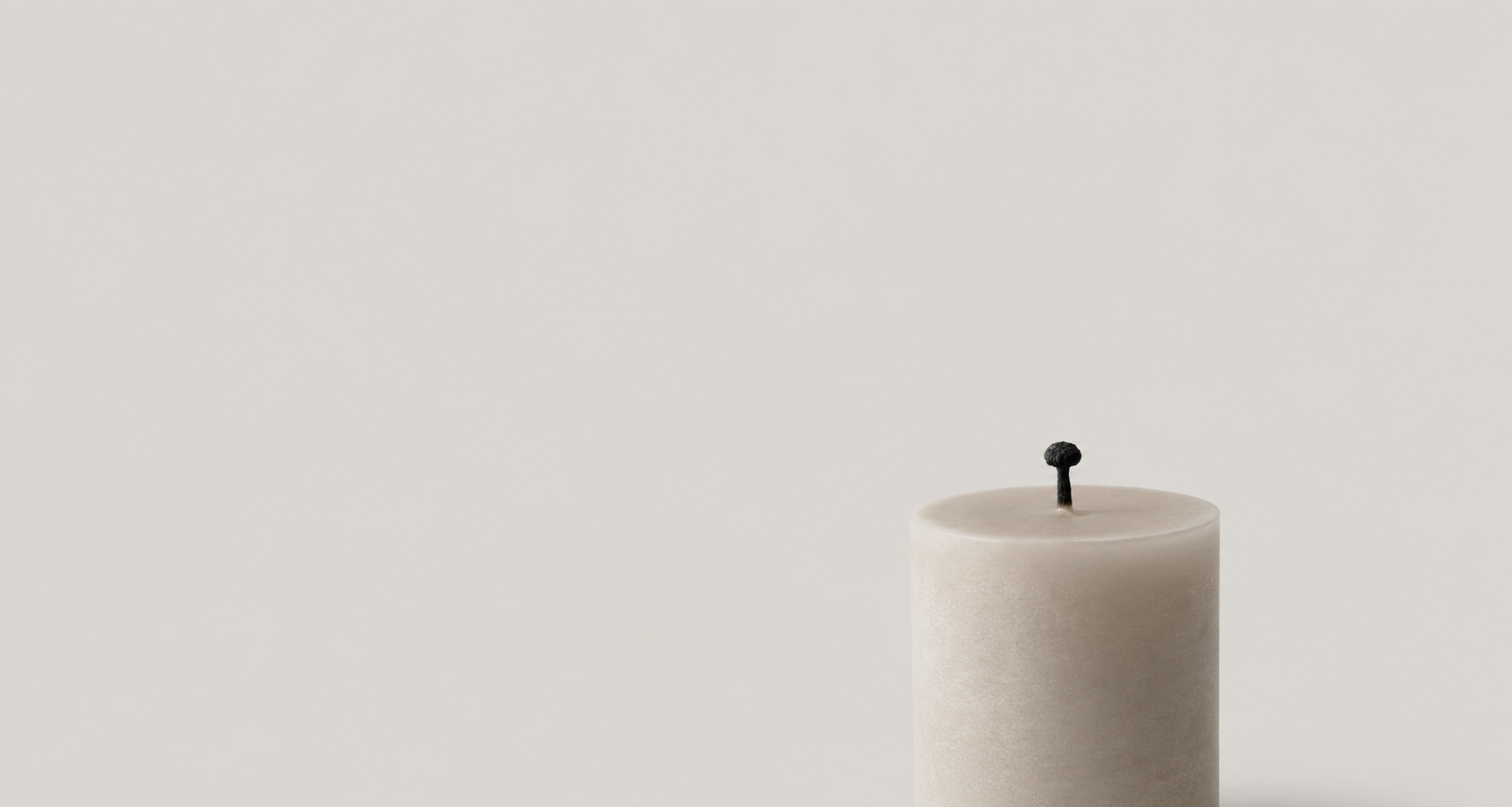
If you’ve ever noticed a small mushroom-shaped tip forming on your candle wick after burning, you’re not alone. Candle makers call this “mushrooming,” and while it’s a common occurrence, it can reveal a lot about the balance between your wick, wax, and fragrance.
What Is Wick Mushrooming?
Mushrooming occurs when carbon builds up on the tip of the wick as the candle burns. It appears as a small black bulb or “mushroom cap” at the top of the wick and can lead to:
- A larger, flickering flame
- Excess soot or smoke
- Black residue on the candle jar
- Faster wax consumption and shorter burn times
While mushrooming isn’t usually a safety concern, it often indicates that the candle isn’t burning as efficiently as it could.
What Causes Mushrooming?
There isn’t a single cause, but several factors can contribute to carbon buildup on the wick.
1. The Wick Is Too Large
A wick that’s too large for the candle can pull up more wax than the flame can burn efficiently. The excess fuel creates unburned carbon, which accumulates on the wick.
2. Too Much Fragrance Oil
Fragrance oil acts as fuel. When a candle contains more fragrance than the wax can properly support, the flame may struggle to burn cleanly, leading to mushrooming and soot.
3. Poor Wax and Wick Compatibility
Different waxes—such as soy, paraffin, coconut, and blends—burn differently. A wick that performs well in one wax may not work as effectively in another, resulting in an uneven or inefficient burn.
4. Heavy Dye or Additive Usage
High color loads, mica powders, and certain additives can affect combustion and make it more difficult for the wick to burn cleanly.
How to Prevent Mushrooming
1. Trim Your Wick Before Each Burn
Always trim your wick to about 1/4 inch (6 mm) before lighting. Regular trimming helps maintain a controlled flame and minimizes carbon buildup.
2. Choose the Right Wick Size
If you’re testing a new candle formula, consider trying a smaller wick. Many soy candles perform well with properly sized cotton or wooden wicks that promote a cleaner burn.
Pro Tip: Use a wick testing kit to compare different wick sizes and find the best match for your wax, fragrance, and container.
3. Keep Fragrance Levels Balanced
Most waxes perform best with a fragrance load between 6% and 10%, depending on the manufacturer’s recommendations. Exceeding those levels can contribute to mushrooming, sweating, and other burn issues.
4. Avoid Overburning
For best performance, avoid burning candles for more than four hours at a time. Extended burn sessions can increase carbon buildup and reduce overall candle quality.
When Mushrooming Is Perfectly Normal
A small amount of mushrooming is completely normal, especially in highly fragranced candles or certain wax blends. If the flame remains stable and the wick is trimmed regularly, a slight mushroom tip is generally nothing to worry about.
Final Thoughts
Mushrooming is one of the most common candle-making challenges, and almost every maker encounters it at some point. By choosing the right wick, keeping fragrance levels balanced, and practicing proper candle care, you can achieve cleaner burns and better-performing candles.
The next time you spot a little mushroom cap on your wick, think of it as your candle’s way of letting you know there’s an opportunity to fine-tune the formula.

